Promontory Point
A lakeside ceremony on the South Side.
Photographer unknown
The ceremony was on a limestone peninsula that juts into Lake Michigan at 55th Street, in Hyde Park. Promontory Point has been there since 1937, laid out by Alfred Caldwell, and the stone steps running down to the water have a weight that makes anything you set beside them look temporary. That was the design problem. The lake and the skyline were already the most beautiful things on the property, so the only real question was how little to add. The answer was cool and quiet. Blue and white, everything low to the table, nothing asking to be looked at.
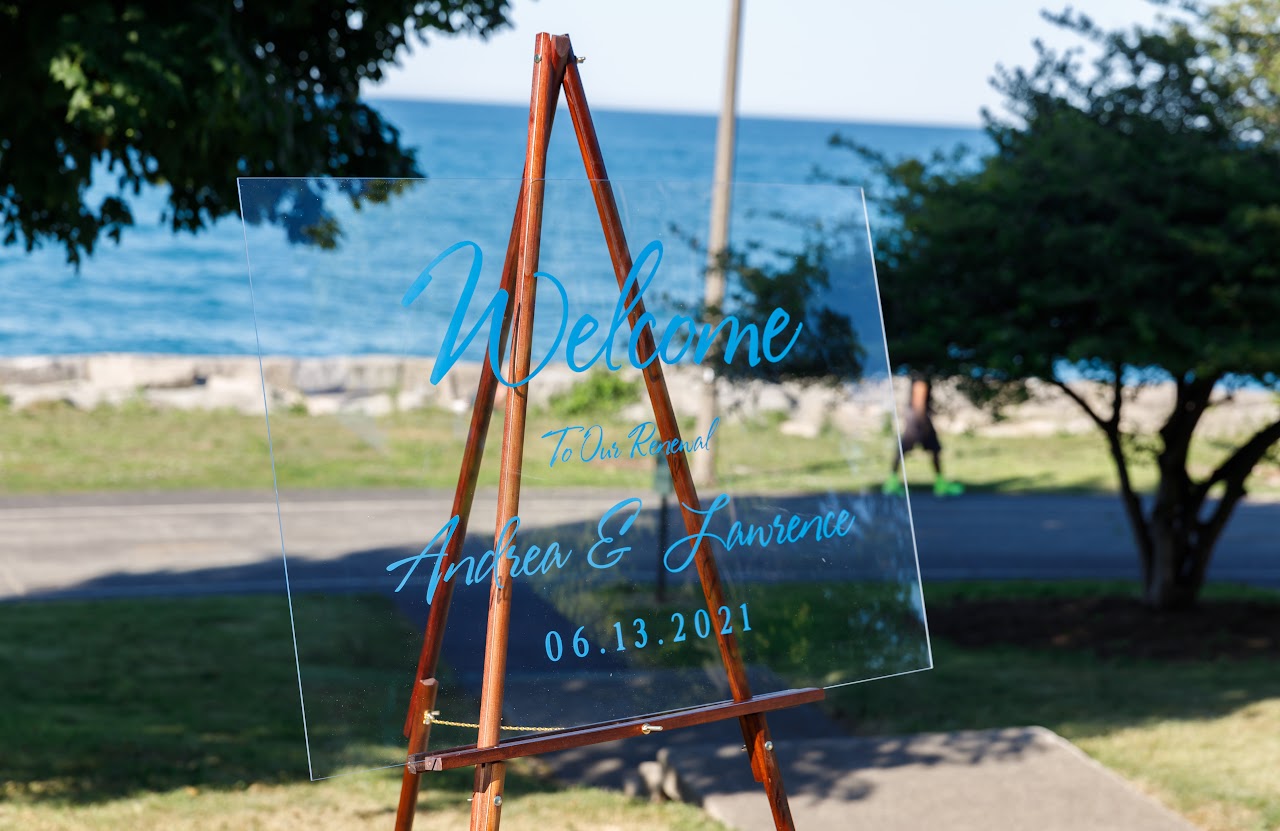
The first thing anyone saw was the sign with the lake behind it. Turning it toward the water instead of the walkway was the first design decision of the day and it set the posture for everything after. Guests arrived and immediately looked past it at the view, which is exactly where you want people before an outdoor ceremony. The day opens with the lake, not with us.
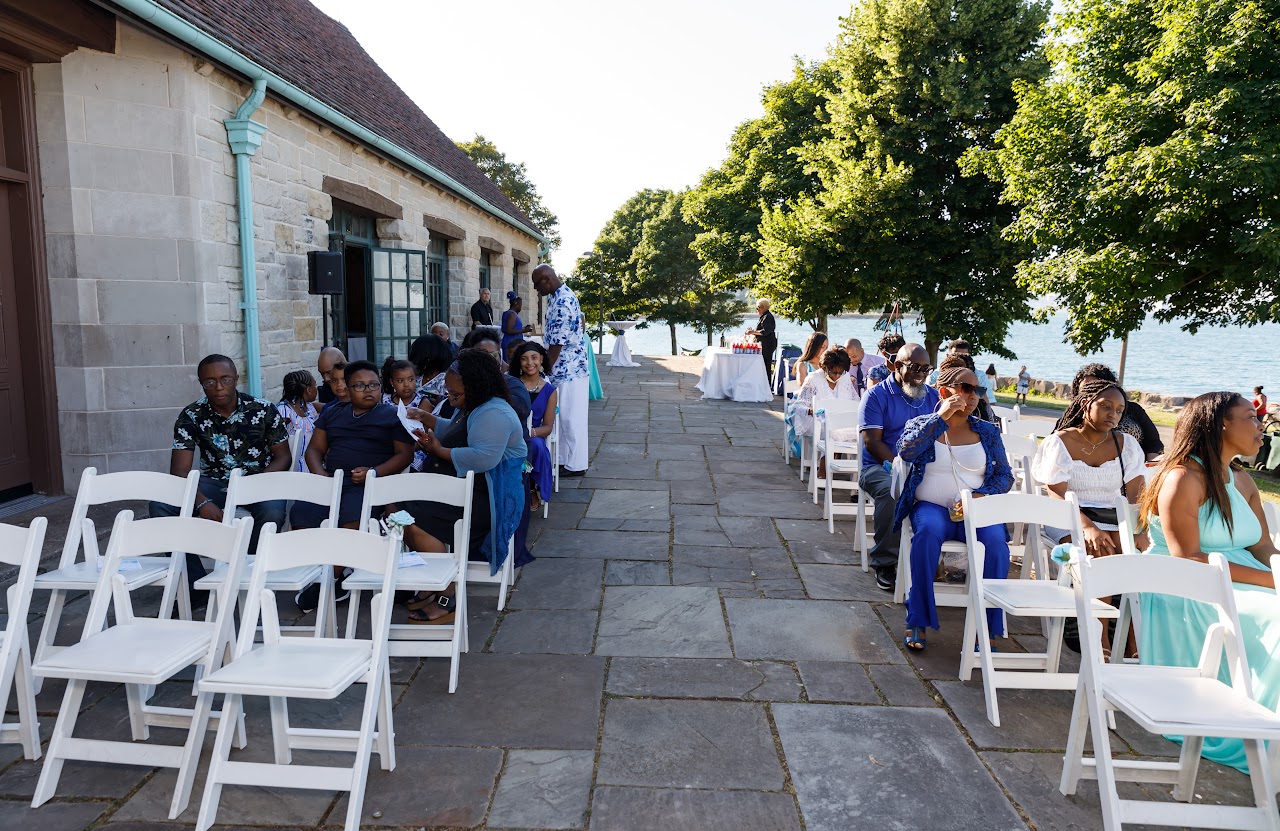
The fieldhouse is Lannon stone out of Wisconsin, warm grey and already textured, and it gave the ceremony a wall on one side and open lawn on the other. We added nothing to it. Stone as the backdrop on one side, water on the other, and the aisle itself left bare. In a setting this strong, a runner or a line of pedestals would have read as clutter the moment the wind moved.
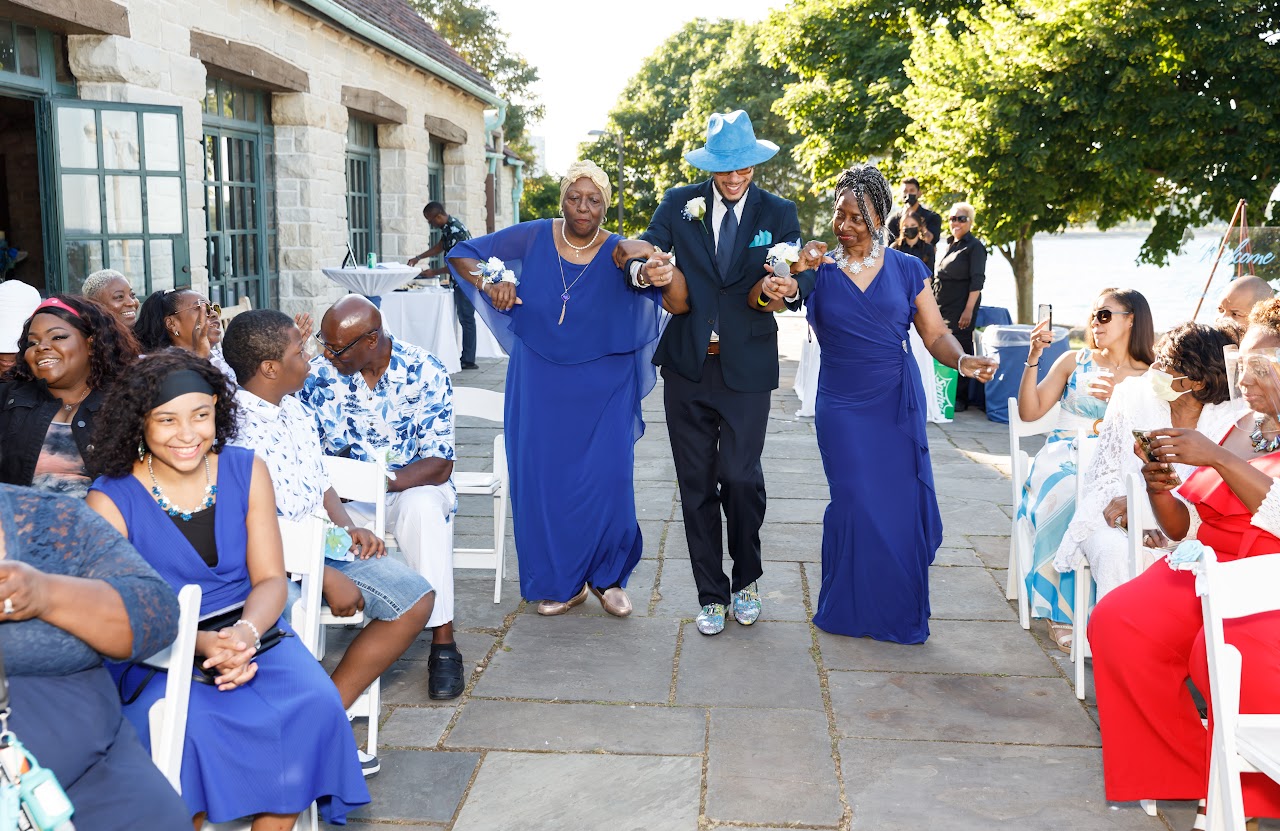
Everything about the processional was built to feel unhurried. Open air flattens sound and swallows ceremony music, so the pace had to come from the people rather than the song, and the look of that, spaced out and slow, is as much a design choice as a timing one. The lake sat behind the aisle the entire way down, so every person walking it had water in frame.
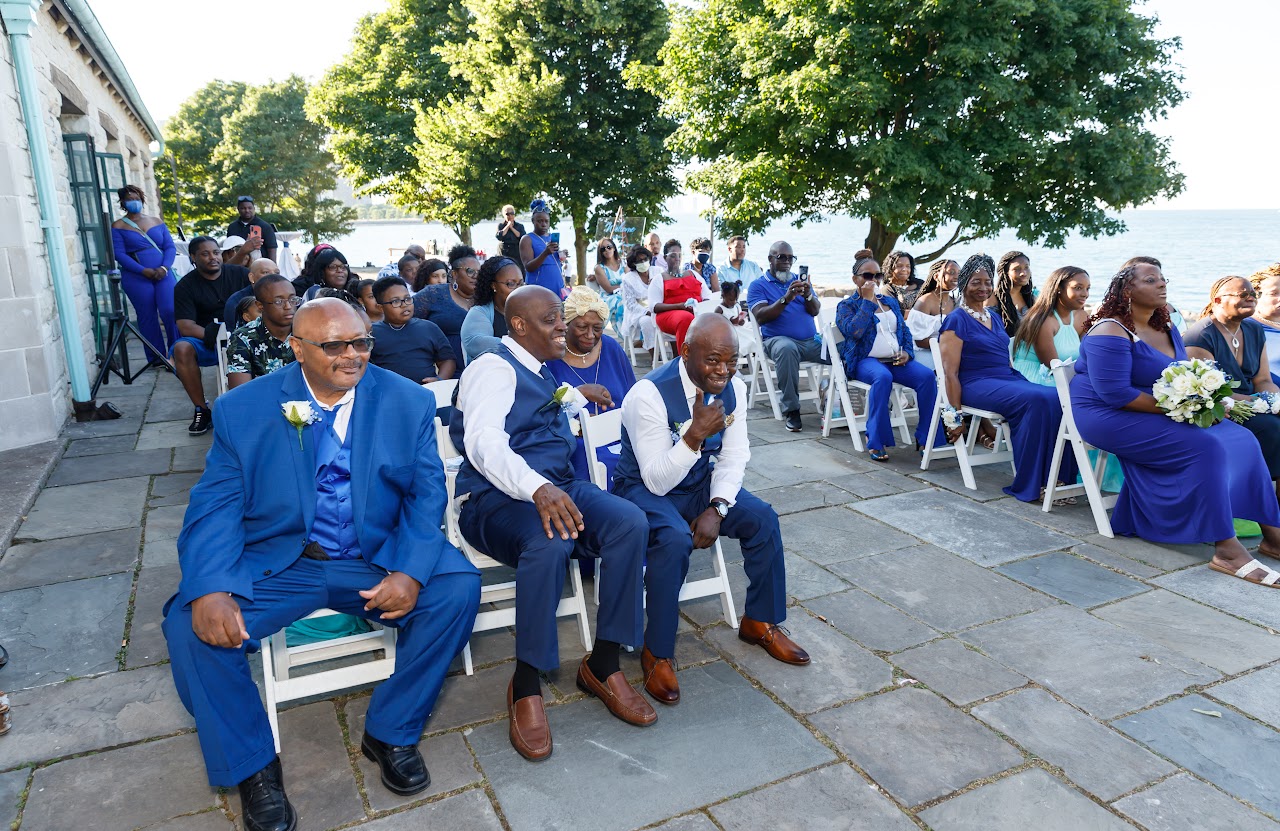
The seating was angled so the back rows kept water in frame instead of the backs of heads. That never appears in a design concept and it completely determines how the photographs feel. People seated at an outdoor ceremony should be looking at the thing that convinced the couple to book the place.
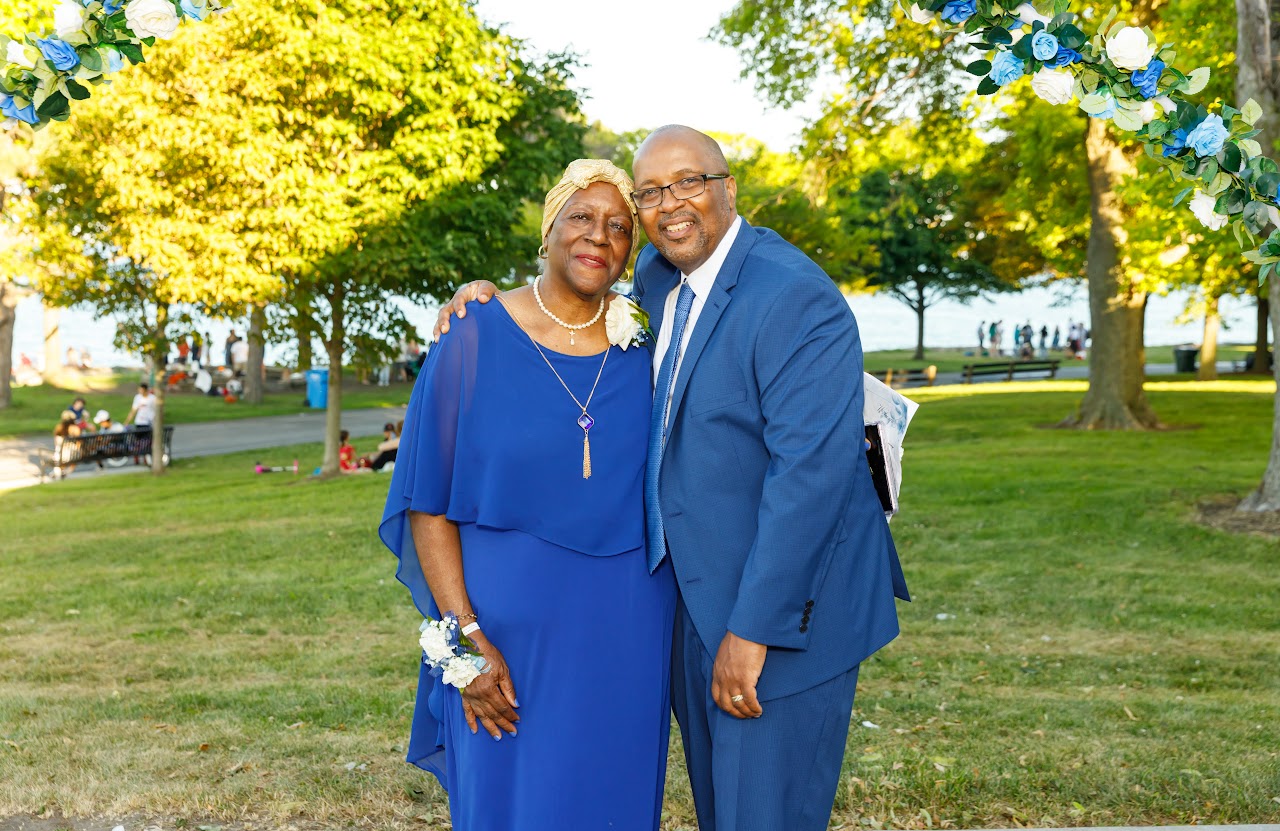
The arch was the only vertical element in the ceremony and it earned the right to be there. Blue and white set loose rather than packed tight, so air moves through it and the whole thing reads soft instead of formal. The shape came out of the water itself, white breaking into blue, nothing symmetrical, a little irregular on purpose. A tight structured arch would have looked imported from a ballroom.
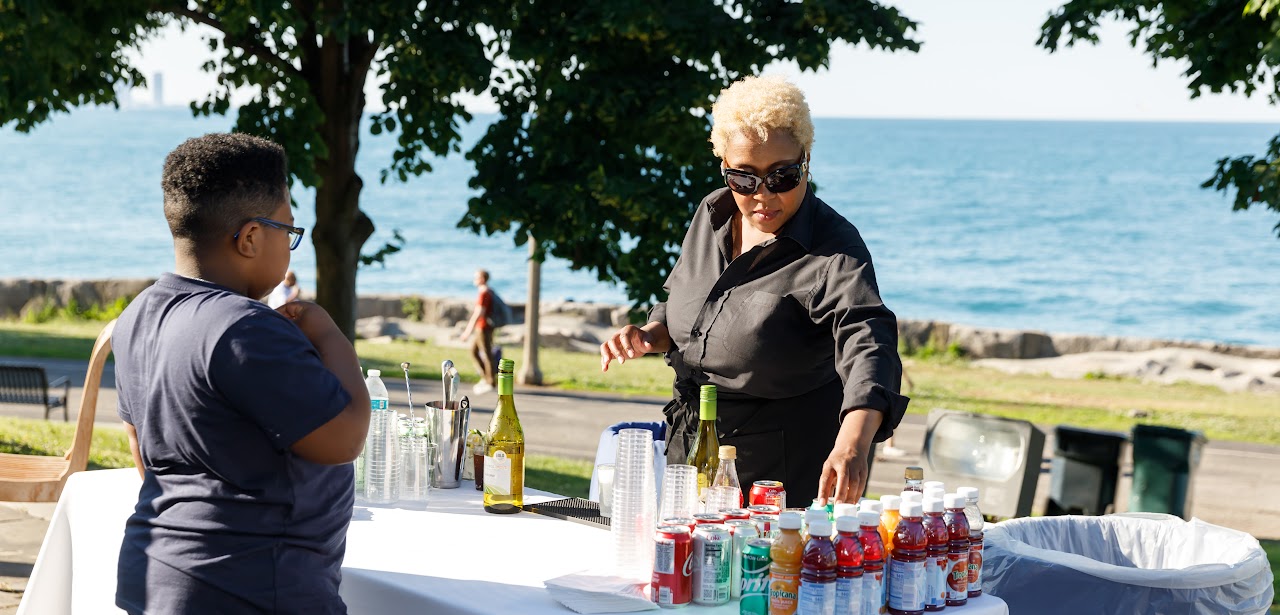
Cocktail hour stayed outside because the view is the point, and moving people indoors early would have spent the best light on the property on a room. The bar was kept low and plain, no signage, no styling past the glassware. Anything you build out there is competing with a lake and will lose.
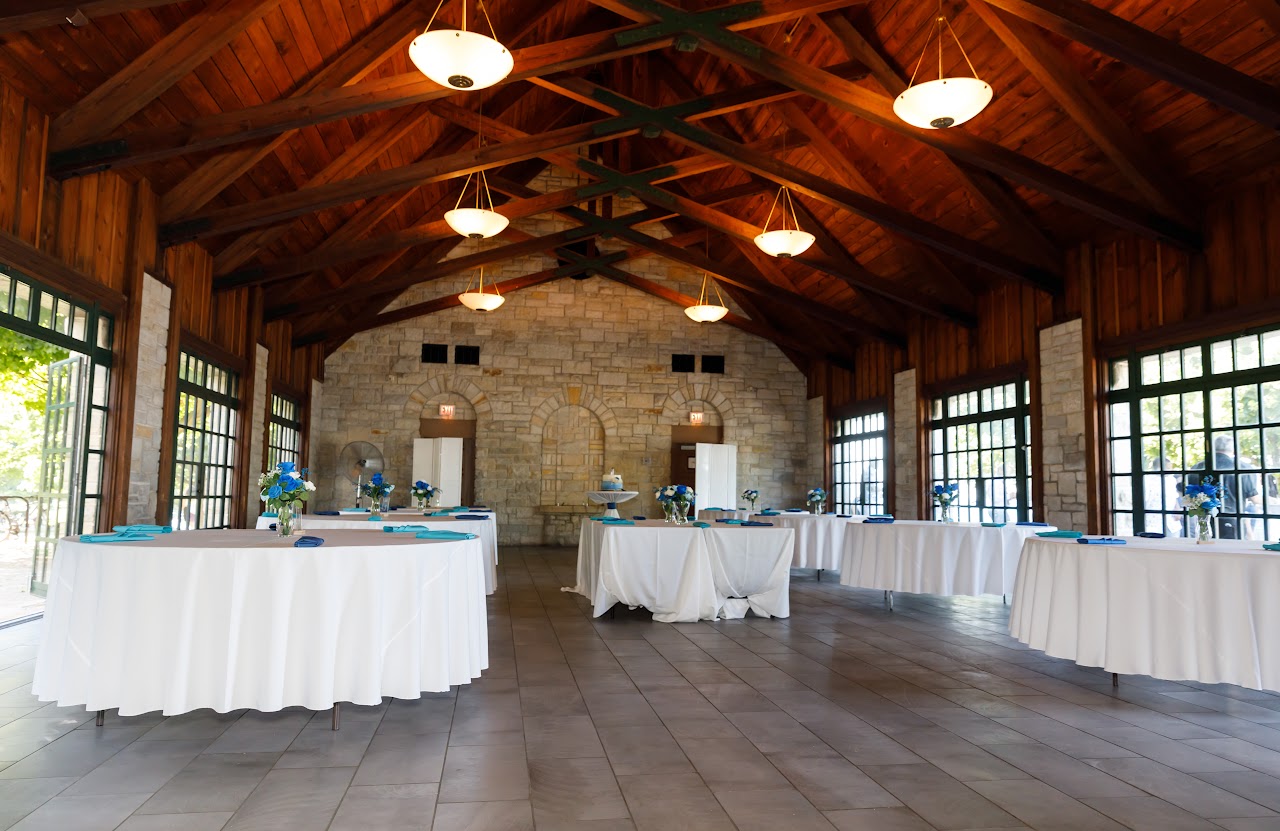
Inside, the hall has beams overhead and a warmth that could easily tip rustic. The cool palette was the counterweight. Blue and white against all that wood keeps the room from reading like a barn, and it carries the lake indoors so the two halves of the day feel like one event instead of a ceremony and then a party somewhere else.
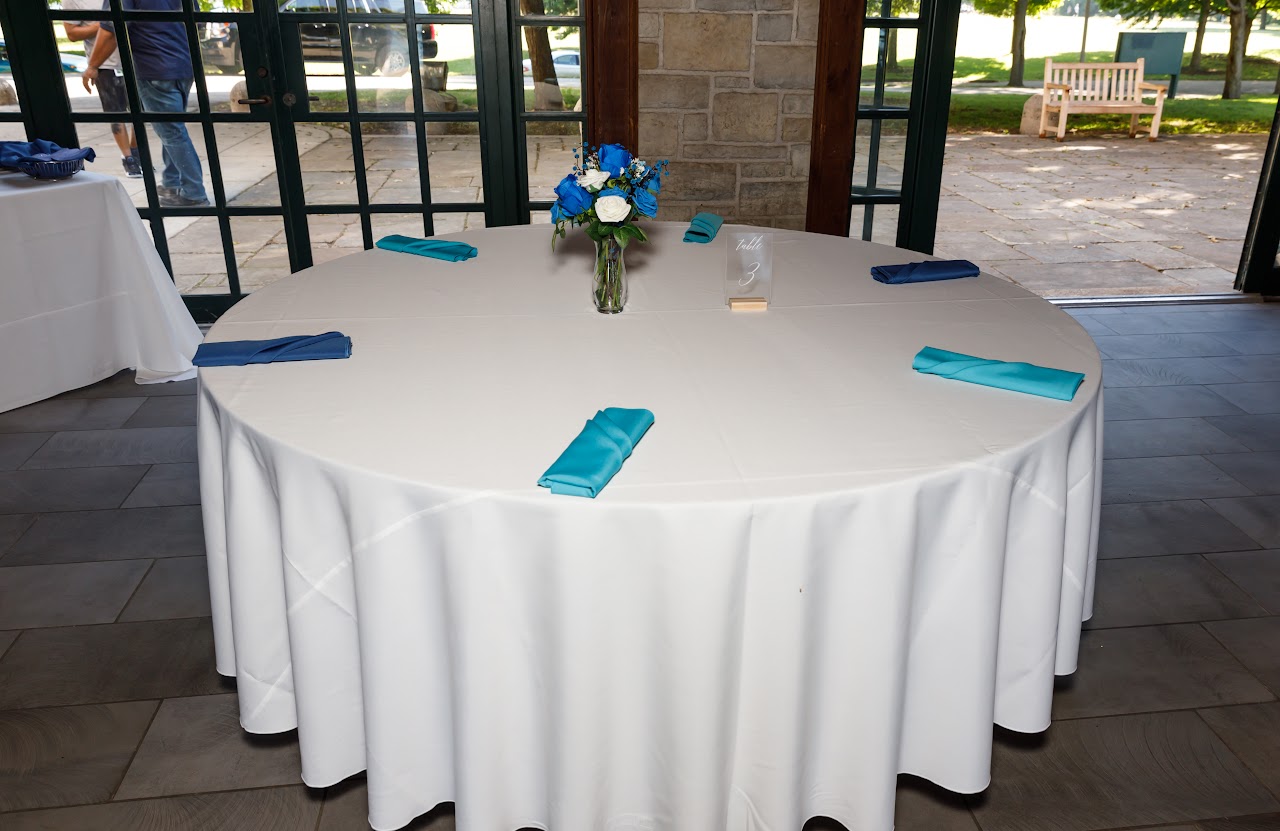
Every round got the same treatment, low enough to see across, blue and white, candlelight doing the rest once the sun went down over the water. The restraint was deliberate. In a room with that much character in the ceiling, tall centerpieces would have been two things fighting for the same attention.
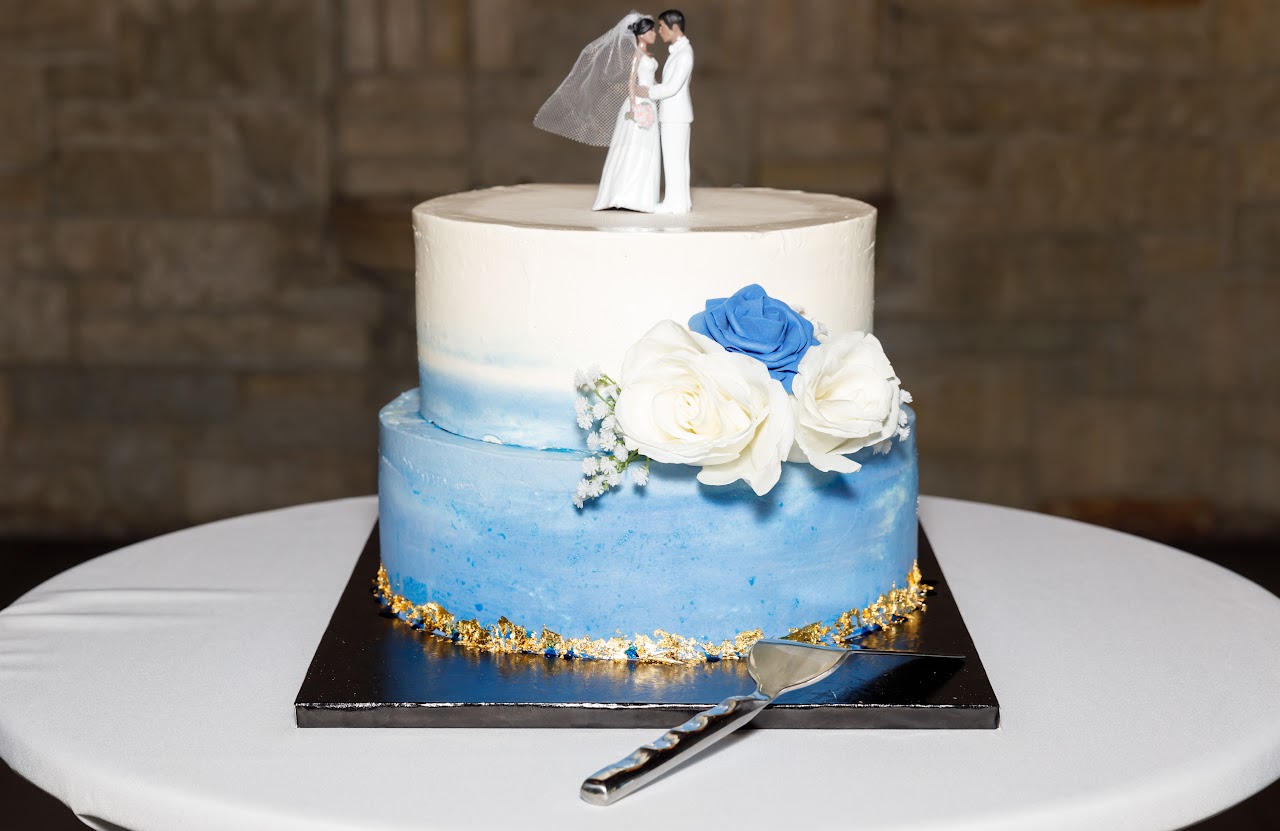
The cake graded light to dark through the same blues, which is where the whole palette resolved. It sat out all night rather than arriving at the end, so it worked as part of the room. A cake on display is a design element for four hours and a dessert for ten minutes.
More from this day
The Seville
Burnt orange, gold lanterns, and a room warm with lantern light and candlelight.
View the storyEvery event is designed one detail at a time.